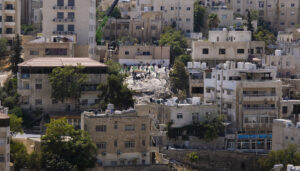
What if cities are made of invisible threads of narrative woven from the stories of its splendid array of characters playing out their lives on its grand of stage?
Words and Photography by Eman Haram
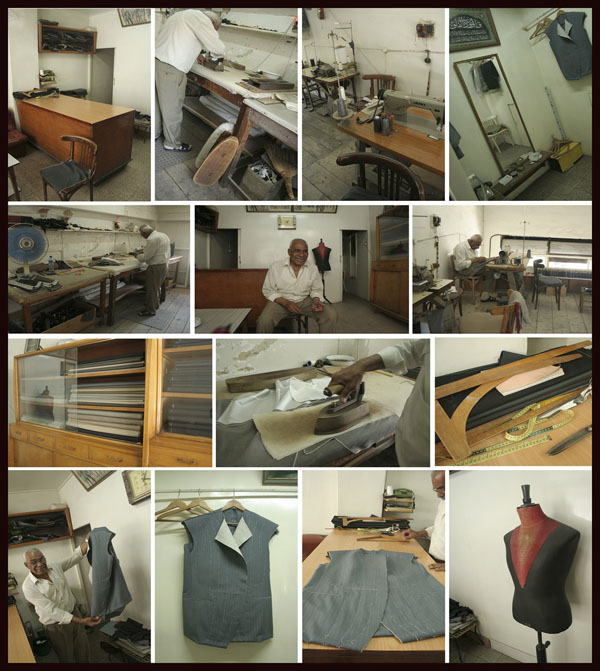
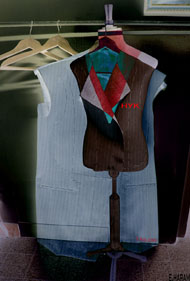
I met Hussein Yousef Khalil in spring of 2009, during one of my photography strolls in the walkable neighborhoods of Amman. The tailor’s mannequin (one of my surrealist obsessions) drew me into the workshop, tempting me to ask for permission to take few photographs of the place. In his quiet and reserved demeanor, the man with a deceptively indifferent smile graciously acquiesced. Timidly, I took few shots of the man and his manequin, and left the workshop dreaming of the many photos I wanted to take, and the conversations I should have started. Several weeks later, I decided to pay the tailor another visit, desiring to discover the hidden city narrated through the story of his place. Though not as long as I had hoped for- both of us were constrained by time during this impromptu visit- but the underlying meaning and implications of this encounter continues to linger with me several months later. The photo-text essay, is a record of the conversation that unfolded on my second and last visit before returning back to Montreal. It is an ode to the man and his craft.
ETH: How many years have you owned and operated your own workshop in Jabal Lweibdeh?
HYK: Long time, forty two years almost.
ETH: Where were you before?
HYK: I was born in Ramleh, Palestine in 1939. We left our town in 1949, going through Nablus and Ariha camps before arriving in Amman in 1950. I had to earn a living, and so I started working with different tailoring shops in the city to learn the trade. Later, I travelled to Beirut to perfect (al tafseel) with a well known Armenian workshop before returning back to Amman to open my workshop in Jabal Lweibdeh.
ETH: How long yo have been in this trade?
HYK: 55 Years.
ETH: Where did your customers come from?
HYK: They were local and from Palestine, but there were also many foreigners who came from different places, and of all ages and social classes.
ETH: When were the best years for you as a tailor?
HYK: During the 60’s and 70’s, I had up to six employees in the workshop at any one time.
ETH: Like how many suits on average per year?
HYK: We would do on average of 300 suits or more per year. The Armenians were very famous for their skills in this craft especially in Aleppo. “Freih” was also a very famous tailoring workshop in Lebanon.
I used to visit these cities to check what was happening there.
ETH:When did you start to feel the decline in your trade?
HYK: In the 90’s more and more people wanted to buy their suits ready-made. People no longer have the patience to go for multiple fittings to make a suit, especially the younger generation.
The few who still do, reserve that for a special occasion, like a graduation or wedding.
ETH: How many people do you employ in your workshop now?
HYK: None, there isn’t t enough work to pay an employee. Since 2000 I have operated the workshop all by myself.
ETH: And now, how many suits on average do you make now?
HYK: Between 15 to 25 max a year. 2-3 per month, and some months non at all.
ETH: Is it a 9-5 sort of trade?
HYK: In principal, I open the workshop at 8 am and close 6 pm, but that is not how it works in this business. If you have a job, you have to finish it within a reasonable time frame for the customer. During religious occasions, both Muslim and Christian, when they came around the same time of the year, we had to work three shifts. During the month of Ramadan, we would stay in the workshop until the shoor hours, but it is the business that came through the store during these peak periods, that earned me my living.
ETH: Is it a craft that you can earn good living from?
HYK: It is hard to prosper from such a craft, but this workshop allowed me to send all my children to university except for one who wanted to be in the military. At times, it was very difficult when two were going to the university at the same time. But material success is not the yardstick to measure why one persevere. There is the love of ones craft at the heart of it.
 ETH: What skills do you need to be a good tailor?
HYK: A good eye, dexterous hands and great patience, more than anything. You don’t need to be gifted in any specific way, it is a trade that can be learnt.
ETH: How much does it cost to make a well tailored suit now?
HYK :Between 150 JD to 300 JD, depending on the quality of the fabric. In London it can cost up to 1000.00 pounds to make a well tailored suit.
ETH: Are any of your children interested in preserving what you have built?
HYK: None.
ETH: So what will happen to shop after you retire, or no longer have the energy to continue doing this work.
HYK: It will disappear, end of story, as simple as that! Silence..
ETH: But there is a whole life’s story in this place, is this a sad thought?
HYK: It is, because this place is not the story of my life, It is my whole life… [Long Silence]
ETH: I hope that the photographs you have generously permitted me to take will have captured the soul of this place.
Al Khayyat Hussien Yousef Khalil
Omar Al Khayyam street – Jabal Lwiebdeh.
Amman- Jordan